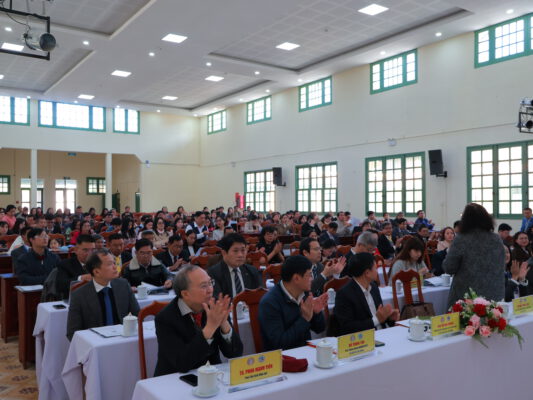
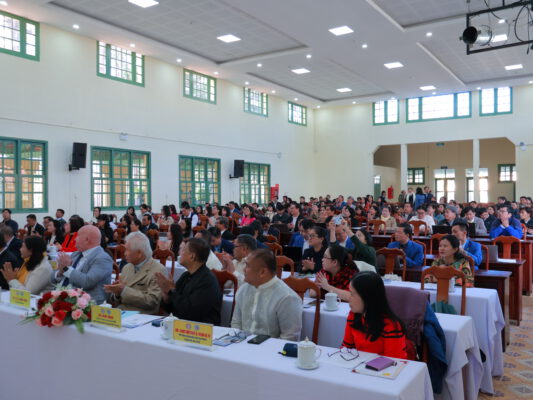
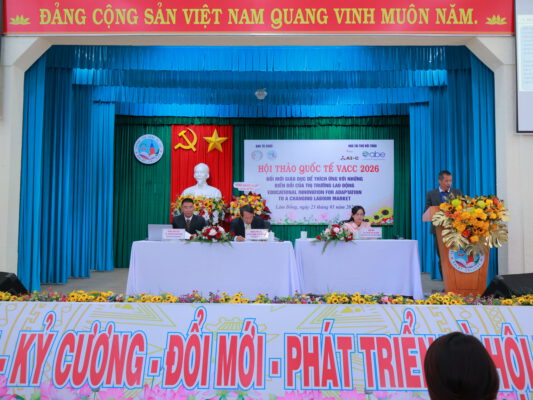
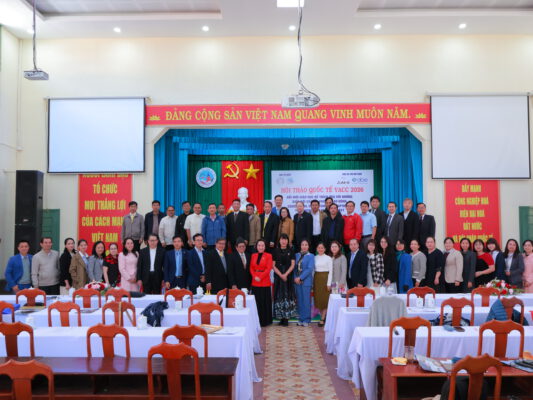
On the morning of January 23, 2026, the VACC 2026 International Conference, themed “Education Innovation for Adaptation to a Changing Labour Market,” was successfully held at Da Lat College, Viet Nam. The conference was organized by the Vietnam Association of Community Colleges (VACC) and brought together over 200 delegates, including policymakers, educational leaders, researchers, international experts, and representatives from enterprises in Viet Nam and abroad.
Distinguished Participants
Representing Lam Dong Provincial authorities were:
- Ms. Mai Thanh Nga, Deputy Director, Department of Science and Technology of Lam Dong Province;
- Mr. Do Van Kha, Vice Chairman, Union of Science and Technology Associations of Lam Dong Province;
- Mr. Do Trong Tao, Deputy Head of the Division of Vocational Education and Continuing Education, Department of Education and Training of Lam Dong Province.
From the Vietnam Association of Community Colleges (VACC):
- Prof. Dr. Pham Tiet Khanh, President of VACC;
- Vice Presidents, Standing Committee Members, and Executive Committee Members of the Association.
From Da Lat College:
- Dr. Bui Quang Son, Party Secretary and President of Da Lat College;
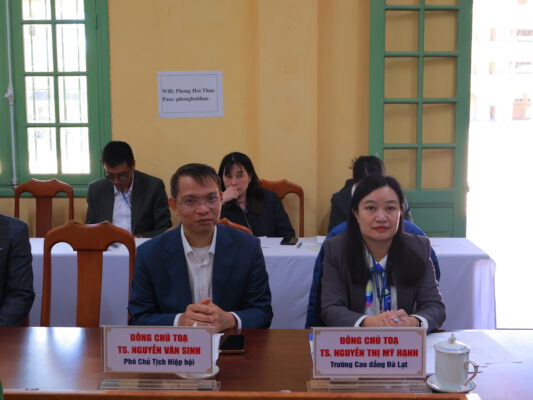
- Dr. Nguyen Thi My Hanh, Vice President of Da Lat College.
International and partner organizations were represented by:
- Mr. Robert William Kindness, Regional Business Director, ABE Global;
- Mr. Tran Quang Sau, Country Director for Viet Nam, ABE Global;
- Delegates from Southern Leyte State University (Philippines):
- Dr. Constantino G. Medilo Jr., Vice President for Academic Affairs;
- Dr. Frederick C. Aniga, Campus Director, Maasin City;
- Dr. Clemente H. Cobilla, Campus Director, Tomas Oppus;
- Mr. Rudy Sabas, Director of WYNIM Education Consultancy and Independent Advisor to the Canadian Bureau for International Education;
- Representatives from the Japan Interior Designers’ Association (JIDA) and the Japan Association for Construction Human Resources (JAC), including:
- Mr. Shiizu Masao, Vice President, JIDA;
- Mr. Kamoshita Sadaharu, Lecturer and Safety Training Advisor, JAC;
- Ms. Kano Motoko, Deputy Head of Management, Research and Communication Divisions, JAC.
Academic Orientation and Opening Remarks
The conference served as an academic forum for sharing research findings, practical experiences, and innovative initiatives, with the aim of strengthening the alignment between education and the labour market and contributing to the development of high-quality human resources for Viet Nam.
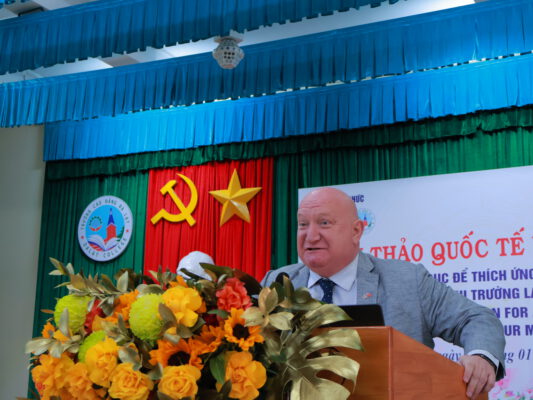
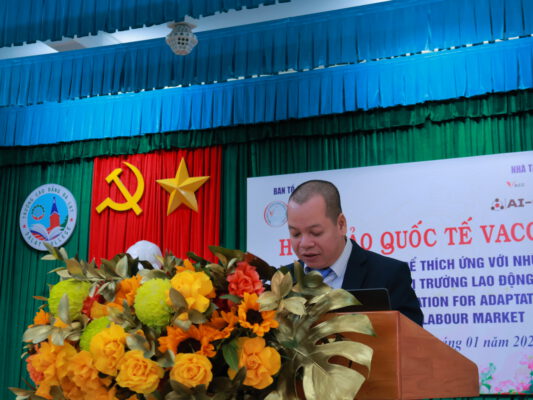
In his opening address, Prof. Dr. Pham Tiet Khanh, President of VACC, emphasized the urgency of educational innovation in response to rapid changes in the labour market and the accelerating pace of digital transformation. He highlighted that improving workforce quality requires not only curriculum reform, but also new pedagogical approaches, governance innovation, and expanded collaboration.
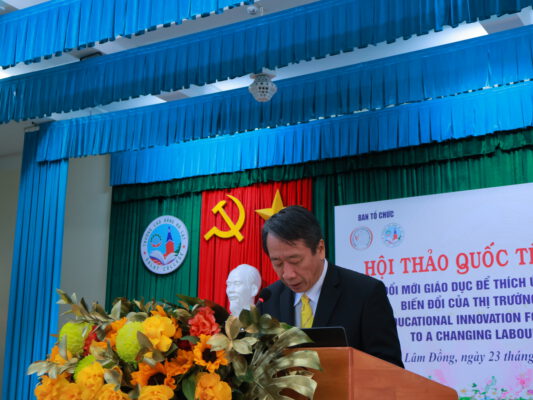
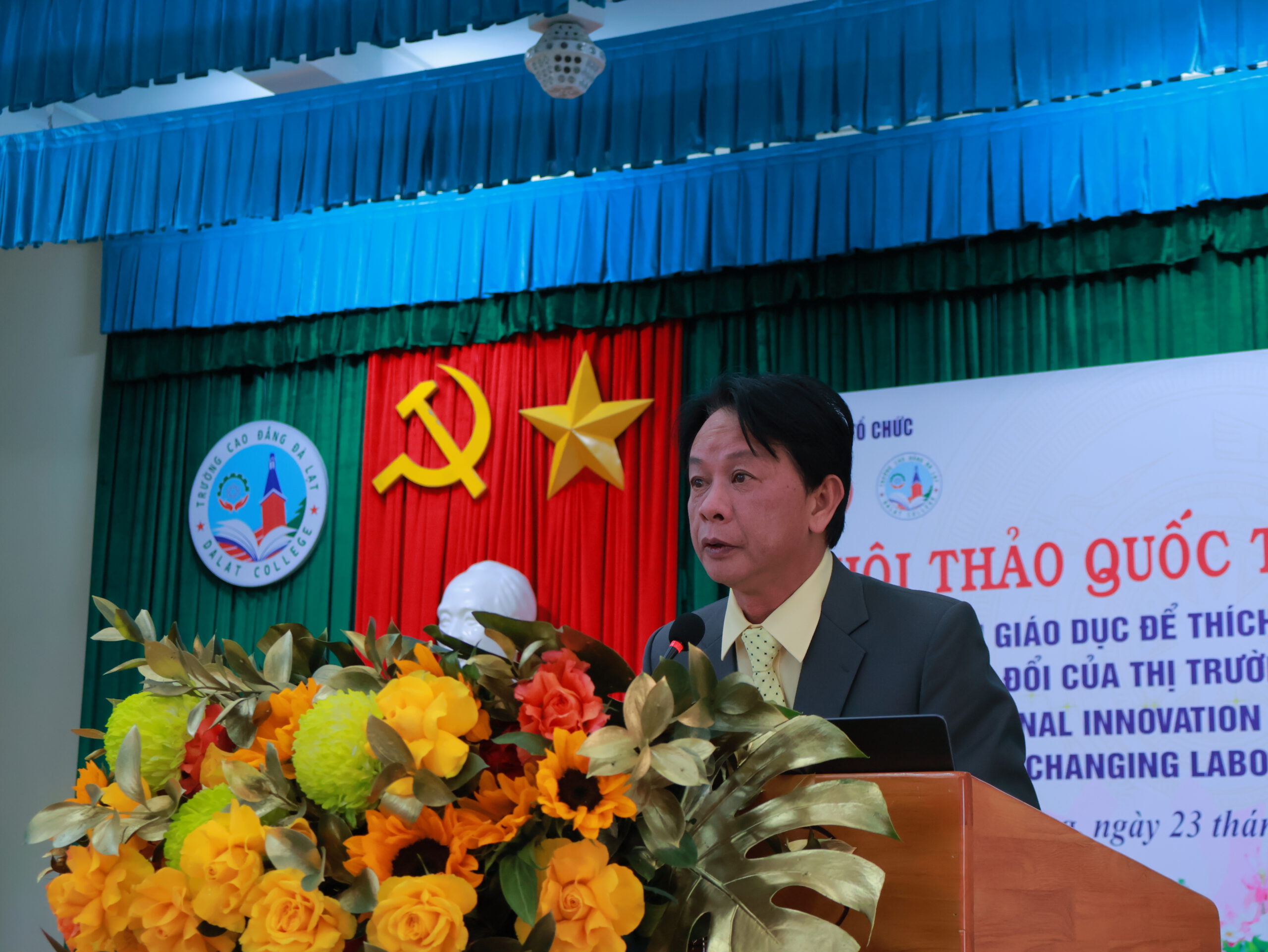
Delivering the welcome remarks, Dr. Bui Quang Son, President of Da Lat College, stressed that educational institutions must continuously renew training mindsets, program content, and teaching methods, while strengthening partnerships with enterprises to better meet real-world labour market demands.
Recognition of Partners and Sponsors
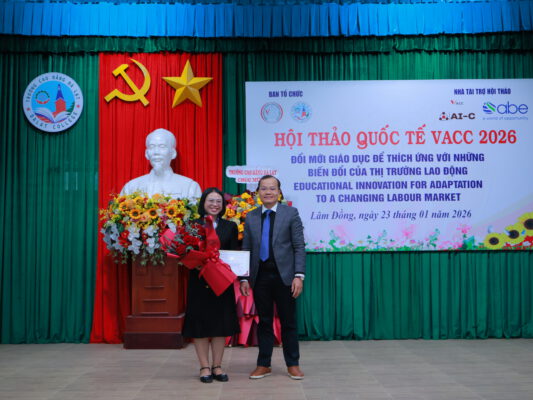
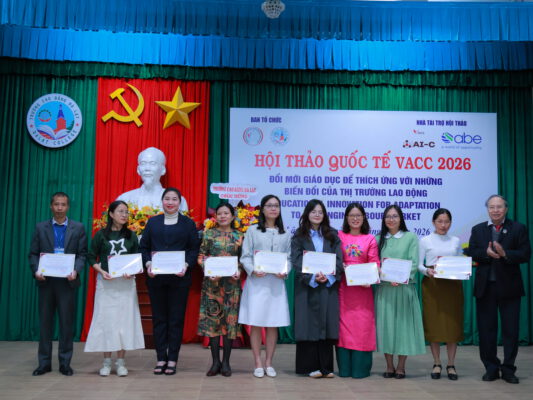
Within the conference framework, the Organizing Committee held a formal certificate presentation ceremony to recognize and express appreciation for the valuable contributions of conference partners and sponsors. Certificates were awarded to ABE Global, represented by Mr. Robert William Kindness and Mr. Tran Quang Sau, and to the Center for Application and Innovation (A-IC), represented by Mr. Le Trieu Hoang Trung, Director of the Center. Their support played an important role in the overall success of the conference and reflected a shared commitment to advancing academic values and sustainable educational innovation.
Keynote Address
The academic program opened with a keynote address delivered by Dr. Le Thi Thanh Tinh (University of Education – University of Da Nang), entitled “Pedagogical Innovation in the Digital Era: From Core Competency Frameworks to the New Workforce Profile.” The keynote provided a comprehensive and timely analysis of pedagogical innovation in the context of digital transformation, offering valuable insights into digital competency frameworks and the evolving profile of the modern workforce. The presentation received strong positive feedback for its academic depth, clarity, and practical relevance.
Parallel Thematic Sessions
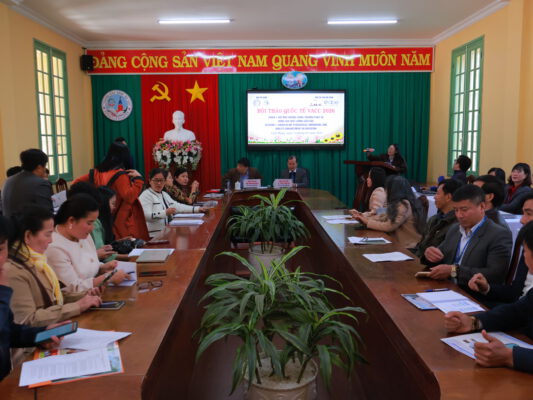
The conference was organized into three parallel thematic sessions, featuring a total of 14 scientific presentations:
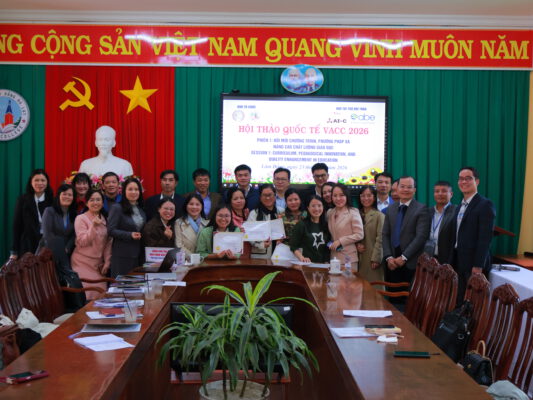
SESSION 1. CURRICULUM, PEDAGOGICAL INNOVATION, AND QUALITY ENHANCEMENT IN EDUCATION
This session focused on curriculum reform, green education and green skills development, science communication training, reproductive health education for college students, and diversified pedagogical approaches. Discussions emphasized that green transformation is no longer optional, but a necessary direction requiring effective and context-appropriate implementation.
SESSION 2. DIGITAL TRANSFORMATION AND INNOVATION IN EDUCATION
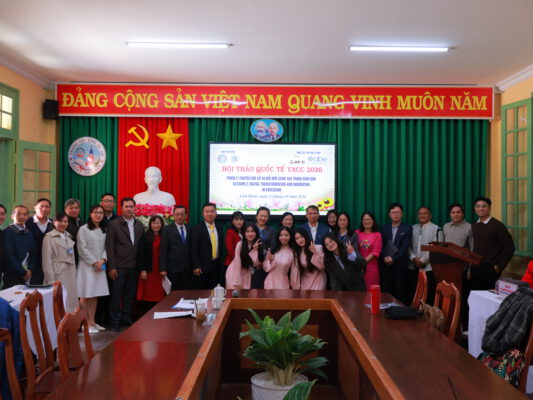
This session addressed digital competencies and graduate employability, technology-enhanced practical teaching, digital transformation assessment in vocational and higher education, and the integration of artificial intelligence and digital storytelling in teaching. According to participant feedback, this session attracted the greatest interest, particularly due to its concrete and immediately applicable models.
SESSION 3. EDUCATION GOVERNANCE, POLICY AND COLLABORATION
This session examined institutional governance capacity in the digital era, education policy reform, and collaboration among educational institutions, enterprises, and international partners. A key message throughout the session was that educational innovation can only be successful when accompanied by governance reform and expanded cooperation.
Key Outcomes
A major highlight of the conference was the diverse participation of experts from international organizations, universities, colleges, and enterprises, providing a comprehensive perspective on contemporary educational challenges. The discussions reflected three converging transformation pillars: green transformation, digital transformation, and governance and collaboration innovation. Active Q&A sessions following each presentation fostered meaningful academic exchange and dialogue among participants.
The VACC 2026 International Conference concluded successfully, reaffirming its role as a significant academic platform for advancing educational innovation and strengthening the connection between education and the changing labour market in Viet Nam and the region.