
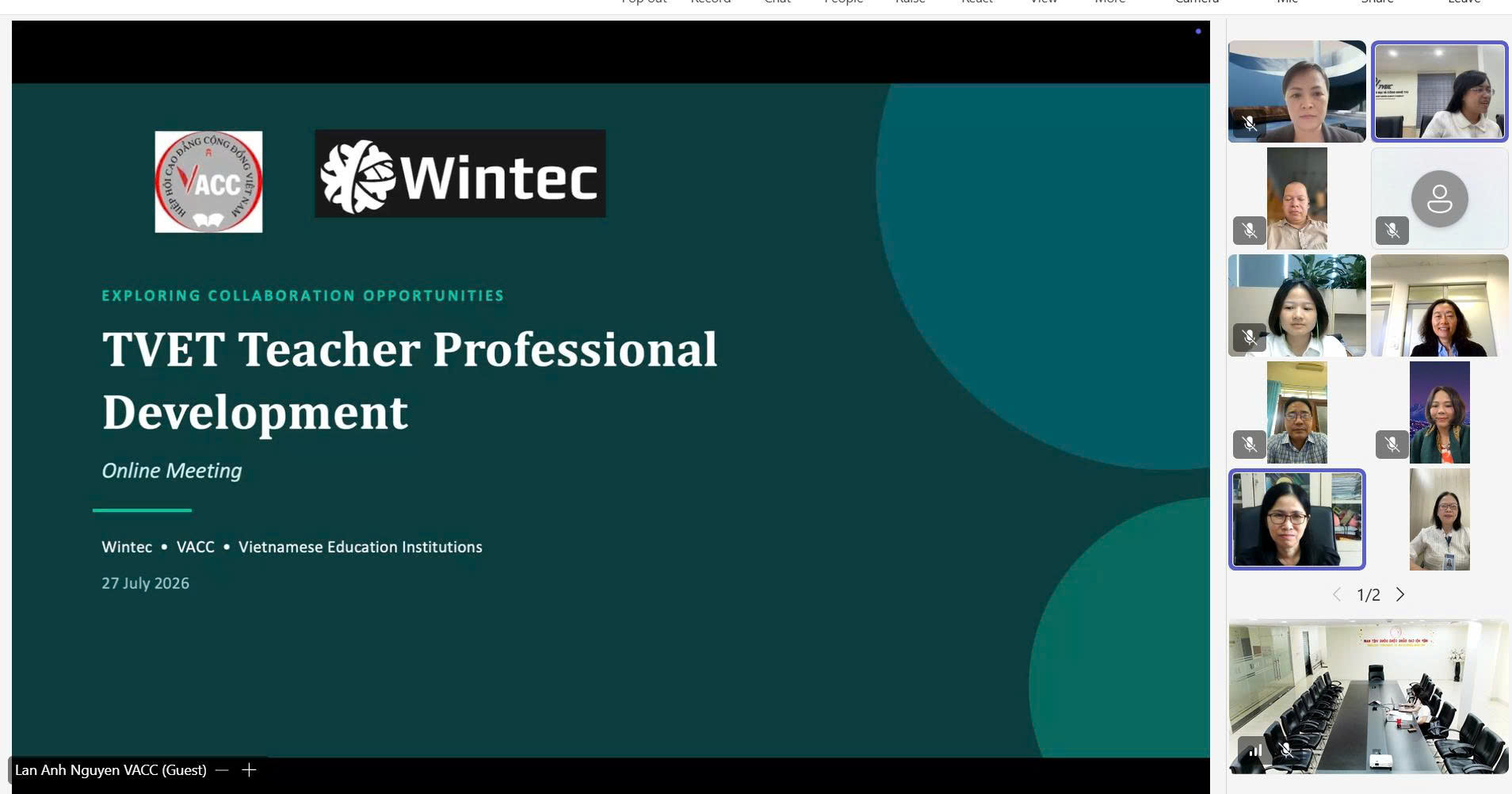
The Vietnam Association of Community Colleges (VACC) convened an online partnership meeting with the Waikato Institute of Technology (Wintec), New Zealand and member institutions and partners on 27 July 2026 to explore opportunities for professional development, capacity building, and international collaboration, especially in technical and vocational education and training (TVET). The meeting provided a platform for Vietnamese institutions to share their development priorities while learning from New Zealand’s experience in competency-based, industry-connected education.
Strengthening international partnerships in TVET
Representing Wintec were Mr. Girish Nair, International Director, and Ms. Farrah Jin, International Short Course Manager.
Participants from Vietnam included representatives from Tra Vinh University, Dong Thap Community College, Phuong Dong Da Nang College, Hanoi College of Commerce and Tourism, Saigon Technology Tourism College, Tan Thoi Dai Education System, the Application and Innovation Center (AI-C), VACC, and the VACC Institute of Science, Technology and Sustainable Development (ITSD).
Opening the meeting, VACC introduced its role in connecting vocational education institutions with international partners while supporting quality enhancement through professional networking, accreditation, capacity building, and international cooperation.
Wintec shares New Zealand’s approach to industry-connected education
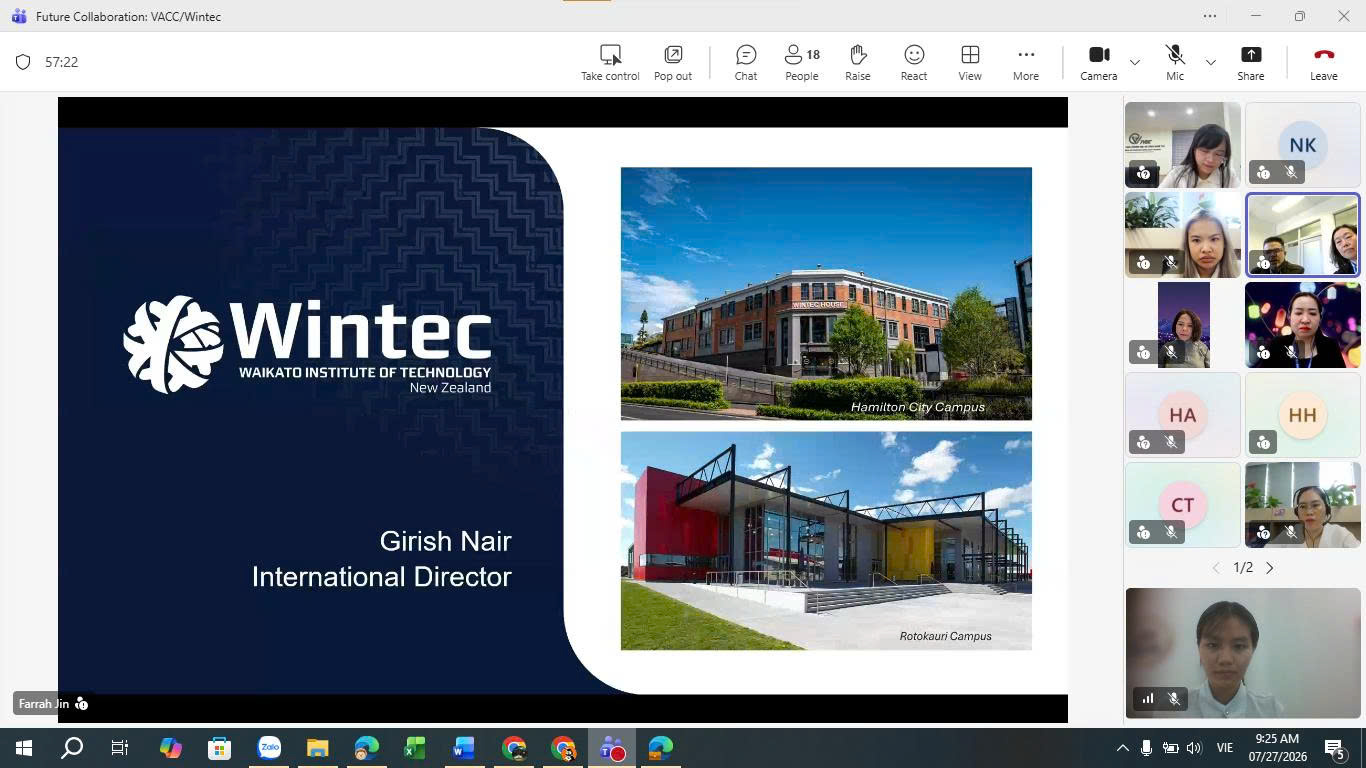
During the meeting, Wintec presented its portfolio of international professional development programmes, including Professional Development, Train-the-Trainer (TTT) programmes for teachers and educational leaders, and Study Tour programmes for international student groups.
According to Ms. Farrah Jin, Wintec’s short courses are highly flexible, ranging from one to twelve weeks and tailored to each partner’s specific objectives, budget, and institutional context. The programmes focus on learner-centred pedagogy, competency-based education, experiential learning, curriculum design, authentic assessment, work-integrated learning, and the effective use of artificial intelligence (AI) and digital technologies in teaching and learning.
Ms. Jin also highlighted New Zealand’s strong industry engagement model, where curriculum development is informed by Industry Skills Boards and close collaboration with employers. Many Wintec academic staff have extensive industry experience before entering higher education, enabling them to integrate authentic workplace challenges, project-based learning, and problem-solving activities into the classroom.
While acknowledging that AI remains an evolving area, Wintec shared its ongoing efforts to support educators in integrating AI into lesson planning, teaching practice, and student engagement, and expressed its willingness to exchange experiences with Vietnamese partners.
Vietnamese institutions identify priorities for collaboration
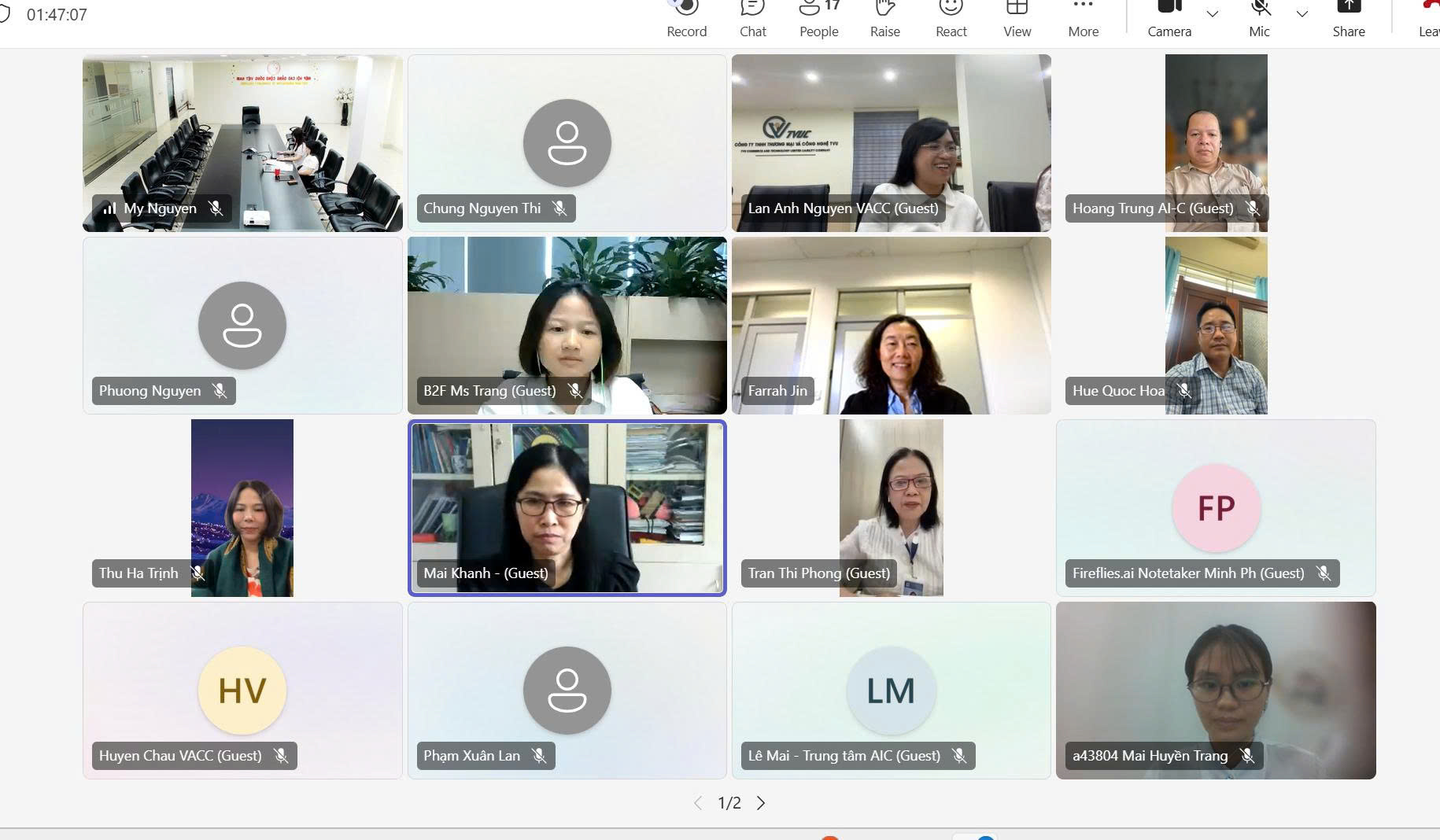
Representing the participating institutions, Dr. Trinh Thi Thu Ha, Rector of Hanoi College of Commerce and Tourism, outlined several priority areas where Vietnamese TVET institutions are seeking international collaboration.
These include strengthening experiential learning pedagogy, developing competency-based curricula, designing digital teaching toolkits, and enhancing innovative leadership capacity for institutional leaders. Dr. Ha emphasised that as Vietnam’s TVET system undergoes significant reforms, institutions are looking for practical models and international experience that can be adapted to the Vietnamese context.
She also proposed that future collaboration should extend beyond training programmes to include joint research, allowing both sides to co-develop solutions that respond effectively to local educational needs.
Ms. Tran Thi Phong, Head of the International Cooperation Office at Phuong Dong Da Nang College, expressed particular interest in blended Train-the-Trainer programmes lasting one to two weeks. Priority topics include experiential learning, AI applications in education, digital transformation, and innovative teaching methodologies.
Responding to these suggestions, Wintec reaffirmed its commitment to co-designing customised professional development programmes based on the specific priorities, learner profiles, and strategic goals of each partner institution.
Exploring international funding opportunities
Another important focus of the meeting was identifying funding opportunities to support future collaboration.
Ms. Mai Khanh, Head of International Cooperation at VACC and Deputy Head of the International Cooperation Office at Tra Vinh University, introduced several funding opportunities available through the Manaaki New Zealand Scholarships, particularly those supporting short-term vocational and professional development programmes.
She also highlighted the potential for developing larger collaborative projects supported by New Zealand’s Ministry of Foreign Affairs and Trade (MFAT), providing new opportunities for long-term partnerships between VACC, Wintec, and Vietnamese TVET institutions.
Wintec welcomed these suggestions and expressed interest in exploring future funding opportunities together with VACC.
Looking ahead
The meeting concluded with a shared commitment to continue discussions and translate ideas into concrete collaborative initiatives.
As immediate next steps, Wintec will provide VACC with sample professional development proposals, study tour programmes, and indicative programme costs. Meanwhile, VACC will continue consulting its member institutions to identify common priorities and coordinate future collaborative programmes that respond to Vietnam’s evolving TVET landscape.
The meeting marked a promising beginning for cooperation between VACC and Wintec, creating new opportunities to strengthen teacher professional development, promote competency-based and experiential learning, foster closer industry engagement, and expand international exchange programmes. Both organisations expressed confidence that these initial discussions will lead to meaningful partnerships that contribute to improving the quality and internationalisation of Vietnam’s TVET sector.